

No, you cannot know from the values page. You know from the evidence the company produces every week in what it funds, promotes, rewards, and tolerates when a value becomes expensive. The gap between stated and lived values is measurable. Most leadership teams have never seen the measurement. The rest of this article shows where the evidence already sits. More on the Belief Gap Diagnostic.
Table of Contents
- What is the difference between stated values and lived values?
- How do you know which values your company actually lives?
- Why is asking people about values by name the wrong measurement?
- What does values misalignment look like before anyone names it?
- How do you put stated values and lived values on one page and compare them?
- How long does it take to close a values gap once you can see it?
- What should a board ask to test whether the values are real?
- Key Takeaways
- References
What is the difference between stated values and lived values?
A stated value is what an organization says it believes. A lived value is what it protects, funds, rewards, promotes, and tolerates when values become inconvenient, according to the Workplace Peace Institute. The distance between the two has a name: the “say-do gap,” as Digital Institute explains.
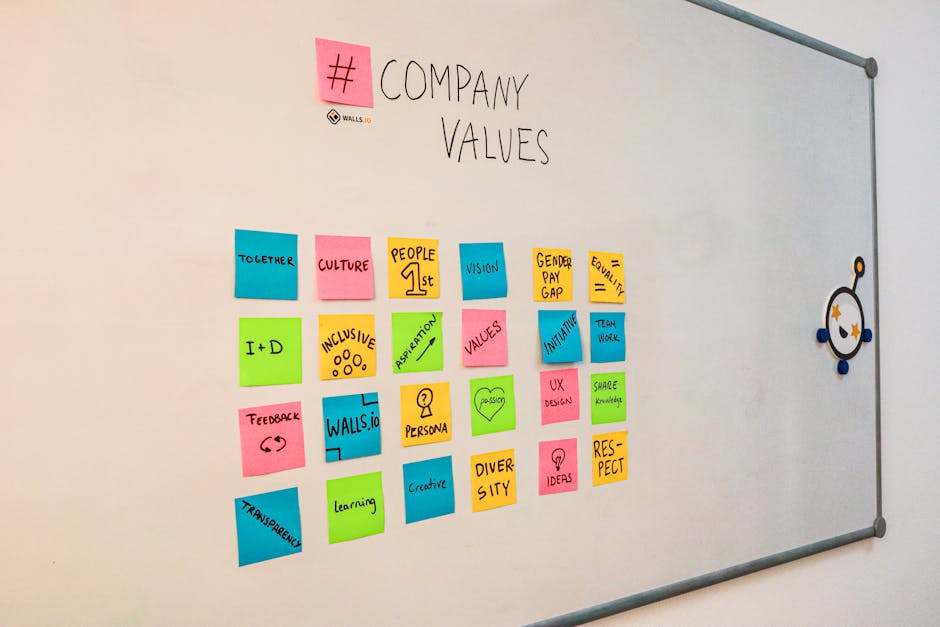
Edgar Schein’s three-level model of culture places values lists at the second level, the espoused values. Everyday behavior, by contrast, is driven by the third level, basic assumptions that operate below conscious awareness. The values page tells you what leadership wants to believe. The assumptions tell you what the organization actually does.
The two run on different clocks. Organizational values can change instantly on paper. Culture forms over years to decades as a slow-moving system of shared assumptions, according to Rework. A new values statement issued in March does not touch the assumptions built over fifteen years.
How do you know which values your company actually lives?
Culture is revealed through trade-offs. When two values compete, whichever one wins is the culture, according to Rework. A company that claims both “customer safety” and “speed to market” will show which one it actually holds the first time a deadline collides with a defect.

People are educated by what you choose. Allocation teaches faster than any values statement. The budget line that survives a hard quarter, the promotion given to the high-revenue manager with the retention problem, the project quietly shelved: these are the curriculum.
The audit method examines how decisions are made, whose voices are heard, what is rewarded, and what is tolerated, according to the Workplace Peace Institute. The evidence is produced weekly. It sits in budget lines, promotion lists, recognition programs, and the decisions that survive contact with a difficult quarter. No survey is required to find it. Someone only has to read it.
Why is asking people about values by name the wrong measurement?
The most common measurement mistake is asking about the value by name rather than translating it into observable behaviors, according to Digital Institute. Ask an employee whether the company values integrity and you will get the answer the employee thinks is safe. Ask whether a manager has reversed a decision after learning it misled a customer, and you will get data.
Values must be measured at three levels: colleagues and the team, managers and senior leadership, and the organization’s systems such as promotion, recognition, and performance reviews. The systems level is where most measurement stops being comfortable, because that is where the trade-offs are recorded.
Three to five behavioral items per value is enough. For an organization with five values, that means a section of 15 to 25 items. The instrument is short because the question is specific.
One caution: climate and culture are not the same measurement. Climate is the current mood and can shift in weeks to a quarter. Culture forms over years to decades, according to Rework. A single survey result is a climate reading, not a culture verdict.
What does values misalignment look like before anyone names it?
Values misalignment surfaces as morale issues without a clear cause, passive resistance or emotional distancing, and high turnover among previously engaged employees, according to the Workplace Peace Institute. The people who leave first are often the ones who believed the values page.
One cautionary example: a leadership team measured climate after a reorganization and announced a “culture transformation.” Six months later, the scores were unchanged, according to Rework. The announcement changed the language. It did not change the trade-offs.
The uncomfortable question is whether the company learns about the gap only through attrition. If the gap shows up first as departures, the company learns last and pays first. The people who leave already knew. The systems already recorded it. The leadership team simply had not read the record.
How do you put stated values and lived values on one page and compare them?
The exercise is two columns. One column holds what leadership says it believes. The other holds what the record shows: funding decisions, rewards, promotions, what was shipped, and what was tolerated under pressure. Most leadership teams have never seen the two columns on one page.
The Belief Gap Diagnostic from Circularity Edge exists to produce exactly that page. It reads twelve belief pairs drawn from Our Common Future – Now against the public record of what the company funds, rewards, and ships. The report is the deliverable: the two columns on one page, the mirror held steady. It is intended for chief executives, boards, and senior leadership teams that have published sustainability commitments and begun to suspect the record and the rhetoric do not match. Pricing is on request.
The Squaring the Circle keynote and morning-after workshop follows the same logic in a different format. The keynote asks what the organization is trying to sustain, and for how long. The following morning, the same executives set what they say they believe beside what the company’s own sustainability page and recent spending say. The pairing runs from $12,500 plus travel and expenses.
The page does not argue, flatter, or accuse. It shows. The measurement is the mirror.
How long does it take to close a values gap once you can see it?
No source in the research record gives a reliable timeline, and any vendor who quotes one is guessing. What the sources do establish is that culture moves over years to decades, while climate can shift within a quarter, according to Rework. Expect visible movement in climate long before culture changes.
The starting condition is measurement at the systems level, not the sentiment level, according to Digital Institute. Promotion criteria, recognition programs, and performance review standards are where the gap is either closed or preserved. The first honest measurement is the beginning of the work, not the end of it.
What should a board ask to test whether the values are real?
Ask for the trade-off record. Which value lost, and what it cost, the last three times two values competed. Culture is revealed through trade-offs, according to Rework.
Ask where the behavioral items sit across the three levels: team, leadership, and systems. Ask whether the systems were measured at all, because promotion and recognition criteria are where values become either real or decorative, according to Digital Institute.
Ask what was tolerated under pressure, and who was promoted during it. The answer to those two questions is the culture, according to the Workplace Peace Institute.
One page, two columns, no adjectives. If the answer arrives as a narrative, the measurement has not been done.
Key Takeaways
- A stated value is what an organization says it believes; a lived value is what it funds, rewards, promotes, and tolerates when the value becomes inconvenient.
- Culture is revealed through trade-offs: when two values compete, whichever one wins is the culture.
- The distance between stated values and lived culture is called the “say-do gap.”
- The most common measurement error is asking about a value by name instead of translating it into observable behaviors.
- Values should be measured at three levels: team and colleagues, managers and senior leadership, and organizational systems such as promotion and recognition.
- Three to five behavioral items per value is sufficient, roughly 15 to 25 items for a five-value organization.
- Culture forms over years to decades while climate can shift within a quarter, so a single survey cannot settle a culture question.
- Read more on the Belief Gap Diagnostic.
References
- When Stated Values and Lived Culture Don’t Match: Navigating Values Misalignment at Work – Workplace Peace Institute
- Stated vs Lived Values: How to Build a Real Company Culture
- Organizational Culture vs Climate vs Values: What’s the Difference? – Rework
- Stated Values or Lived Culture? How to Measure Whether Your Company Values Are Really Lived – Digital Institute