
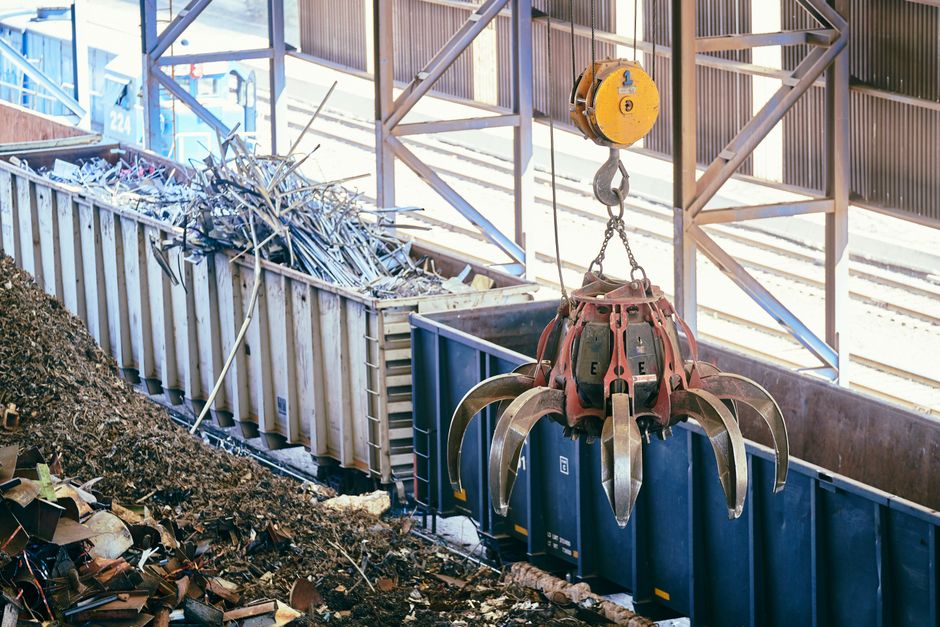
A circular economy is a system in which materials never become waste and nature is regenerated, built on three design principles: eliminate waste and pollution, circulate products and materials at their highest value, and regenerate nature. Most organizations that claim circularity are running a recycling program with better branding. The gap between that claim and the material record is where regulatory, reputational, and disclosure risk now lives.
Table of Contents
- What is a circular economy, in plain terms?
- How does the circular economy model work in practice?
- What are the four R's of the circular economy — and do they match the three principles?
- Why does circularity matter to emissions and to the balance sheet?
- Is the United States actually a circular economy?
- Where does the circular economy fall short?
- How do you test whether your organization's circularity claim survives scrutiny?
- Key Takeaways
- References
What is a circular economy, in plain terms?
A circular economy is an economic system where materials never become waste and nature is regenerated. Products and materials stay in circulation through maintenance, reuse, refurbishment, remanufacture, recycling, and composting, according to the Ellen MacArthur Foundation.
The contrast is the linear model. The linear economy takes materials from the Earth, makes products, and throws them away as waste, as the Ellen MacArthur Foundation describes it. The European Parliament calls the same pattern take-make-consume-throw away.

The three principles are driven by design, not by end-of-pipe recovery. That distinction matters. A company that designs waste out at the start is doing something different from a company that collects and recycles what it has already produced.
The system is underpinned by a transition to renewable energy and materials, according to the Ellen MacArthur Foundation. Circularity without that transition is a materials strategy bolted onto a fossil economy.
One thing the definition declines to name is its object. What is being sustained, and for how long? Most corporate definitions skip that question entirely.
How does the circular economy model work in practice?
The circular economy model works by keeping materials and products in circulation for as long as possible, according to the US Environmental Protection Agency. The European Parliament adds that the life cycle of products is extended.
Four loop strategies do the work, as described on Wikipedia's circular economy entry. Narrowing the loop means using fewer resources per product or service. Slowing the loop means extending product lifespan through reuse and repair. Closing the loop means recovering materials from waste through high-quality recycling. Substituting inputs means replacing finite or polluting resources with renewable or less harmful materials.
The Ellen MacArthur Foundation publishes a butterfly diagram showing the continuous flow of materials in a circular economy. The diagram separates technical materials, which circulate in loops, from biological materials, which return safely to the ecosystem.
The Mascaro Center for Sustainable Innovation states the same logic: valuable material either moves in loops through the economy or, if biologically derived, returns to the ecosystem as nutrients.
Recycling is one loop among four. It is the closing loop, listed last for a reason. A company that only recycles has not narrowed, slowed, or substituted anything.
What are the four R’s of the circular economy — and do they match the three principles?
The four R's, reduce, reuse, recycle, and recover, are practitioner shorthand, not the official framework. They map imperfectly onto the three design principles and the four loop strategies.
Reduce corresponds to narrowing the loop. Reuse corresponds to slowing it. Recycle and recover both sit inside closing the loop. Substitution has no R in the shorthand, which is the first sign the shorthand is incomplete.
The shorthand misleads in one specific way. It puts recycling on equal footing with reduction, when the hierarchy is explicit. The Ellen MacArthur Foundation places eliminating waste and pollution first among its three principles. Recycling is what happens after waste has already been created.
Design determines most of the outcome. An estimated more than 80% of a product's environmental impact is fixed at the design phase, according to the European Parliament. The four R's describe what happens to a product after it exists. The three principles describe what should have happened before it was made.
Why does circularity matter to emissions and to the balance sheet?
Extraction and processing of material resources accounts for over 55% of global greenhouse gas emissions, according to Wikipedia's circular economy entry. That is more than half of all emissions, before a product is even used.
Global implementation of circular economy strategies could reduce emissions by 22.8 billion tons, equivalent to 39% of global emissions produced in 2019, the same source reports. The number is large enough to survive a board challenge.
The narrower figure is sharper. Circular strategies in cement, aluminum, steel, plastics, and food alone could reduce 9.3 billion metric tons of CO2 equivalent, equal to all current emissions from transportation, according to Wikipedia's circular economy entry. Five materials. One sector's worth of emissions.
The balance sheet argument is not only about cost avoidance. Moving toward a more circular economy could create 700,000 jobs in the EU alone by 2030, according to the European Parliament.
These are the numbers that hold up when adjectives do not.
Is the United States actually a circular economy?
No. The United States has adopted circularity within a sustainable materials management approach pursued by the EPA and other federal agencies since 2009, according to the US Environmental Protection Agency.
The Save Our Seas 2.0 Act defines a circular economy as an economy using a systems-focused approach with industrial processes and economic activities that are restorative or regenerative by design, the EPA notes. A statutory definition is not a statutory target.
What the EPA actually does is programmatic. The agency supports waste management infrastructure and recycling through the Solid Waste Infrastructure for Recycling and the Recycling and Education Outreach grant programs. It also advances sustainable management of batteries and electronics to recover critical minerals and prevent pollution, according to the EPA.
The contrast with Europe is structural. The European Union wants to build a circular and climate-neutral economy by 2050, according to the European Parliament. The EU produces more than 2.1 billion tonnes of waste every year, and each European consumed 14.9 tonnes of raw materials in 2022. Those numbers create political pressure that grant programs do not.
Where does the circular economy fall short?
Uptake of circular principles has been incremental at best, primarily because of a lack of truly circular designs to replace conventional linear models, according to the Mascaro Center for Sustainable Innovation.
Planned obsolescence is a structural obstacle. Products designed with limited lifespans to encourage repeat purchase are the opposite of circularity, and the European Parliament has called for measures to tackle the practice, according to the European Parliament.
Rebound effects are another limit. Substituting inputs without narrowing the loop does not reduce throughput. A renewable material consumed at the same volume is still consumed.
The training gap compounds the design gap. A lack of holistic training in circular design principles is cited as a key reason for slow uptake, the Mascaro Center for Sustainable Innovation reports.
If a circularity claim rests on recycling rates, what has actually changed about design? That is the question most sustainability pages decline to answer.
How do you test whether your organization’s circularity claim survives scrutiny?
The test is the distance between what leadership says it believes about circularity and what the company funds, rewards, and ships. The two are rarely the same document.
Circularity Edge offers a Belief Gap Diagnostic for exactly this examination. It reads twelve belief pairs drawn from Our Common Future – Now and sets what leadership says it believes beside what the evidence shows. The deliverable is a two-column report: the stated belief on one side, the operative belief on the other.
A complementary option is Squaring the Circle, a keynote and morning-after workshop pairing. Executives set what they say they believe beside their own sustainability page and recent spending. The package is from $12,500 plus travel and expenses, with the keynote alone from $10,000.
The design gap identified by the Mascaro Center for Sustainable Innovation is the same gap this examination surfaces. Most circularity claims are recycling claims wearing a broader label.
Key Takeaways
- A circular economy is a system where materials never become waste and nature is regenerated, built on three design principles.
- The linear economy takes materials from the Earth, makes products, and throws them away as waste.
- The four loop strategies are narrowing, slowing, closing, and substituting, and recycling is only the closing loop.
- Extraction and processing of material resources accounts for over 55% of global greenhouse gas emissions.
- Global circular economy implementation could reduce emissions by 22.8 billion tons, equivalent to 39% of 2019 global emissions.
- The United States has no binding national circularity targets, and federal work sits inside EPA sustainable materials management programs.
- Uptake of circular principles has been incremental at best, primarily because truly circular designs to replace linear models are scarce.
References
- The Circular Economy | Definition & Model Explained — Ellen MacArthur Foundation, date unknown
- What is a Circular Economy? — US Environmental Protection Agency, last updated May 5, 2026
- Circular economy: definition, importance and benefits — European Parliament, published May 24, 2023
- Circular economy — Wikipedia, date unknown
- What Is the Circular Economy? — Mascaro Center for Sustainable Innovation, date unknown