
Better Decisions. Better Futures.
Every leadership team eventually reaches decisions that seem impossible to resolve.
Should we optimize for quarterly performance or long-term resilience?
Should we invest in circularity?
How much sustainability is enough?
Why do intelligent people continue making decisions that produce outcomes nobody actually wants?
For more than forty years, I’ve been helping organizations answer questions like these.
Not by starting with another sustainability strategy.
But by examining the assumptions that shape the decisions before strategy begins.
Because organizations rarely outperform the assumptions upon which their decisions are built.
Organizations don’t transform because they adopt better strategies. They transform because leaders begin making better decisions.
Helping leaders make better decisions has become my life’s work.
Three Ways We Create Better Decisions
Everything I do falls into three categories.
Inspire.
Help leaders see differently.
Recalibrate
Surface the assumptions limiting better decisions.
Redesign.
Embed new decision-making across the organization.
1. KEYNOTE SPEAKING
Keynotes That Change the Questions Leaders Ask

The best keynote doesn’t simply inform.
It changes the conversation people have when they return to work.
My presentations combine forty years of business experience with practical examples, original research, and a fresh perspective on sustainability, leadership, organizational change, and artificial intelligence.
Popular keynote topics include:
- Why Sustainability Reached Its Ceiling
- The Sustainability Ceiling™
- Design Like Nature™
- Full-Spectrum Abundance
- Building Businesses That Strengthen Life
- Perfectly Wrong: AI’s Hidden Sustainability Blind Spots
Ideal for:
- Conferences
- Leadership Summits
- Board Retreats
- Executive Forums
- Industry Associations
2. Executive Decision Recalibration™
Surface the assumptions shaping your organization’s most important decisions.
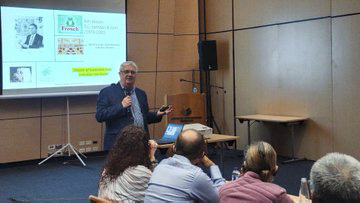
Every organization develops patterns of decision-making.
Over time, those patterns become so familiar they disappear from view.
Until progress begins to stall.
Most organizations respond by changing the strategy.
Few stop to ask whether the assumptions guiding the strategy still fit the future they’re trying to create.
This engagement helps leadership teams identify and recalibrate the assumptions shaping their decisions before investing in the next initiative.
The outcome isn’t another report.
It’s better strategic judgment.
→ Learn About the Recalibration
3. EXECUTIVE ADVISORY
Embedding Better Decision-Making
Real transformation is rarely achieved in a workshop.
It happens through sustained leadership.

I work with a small number of organizations each year, helping executive teams redesign governance, innovation, product development, capital allocation, and long-term strategy using the principles developed in Our Common Future—Now.
This is not conventional sustainability consulting.
It is organizational redesign built around one central question:
How do we create enduring commercial success while strengthening the conditions that support life?Real transformation rarely happens because leaders hear one inspiring idea.
It happens because organizations gradually make different decisions.
I work alongside leadership teams as those new patterns become embedded across governance, innovation, product development and long-term strategy.
The goal isn’t simply a more sustainable organization.
It’s an organization better equipped to make the decisions the future will require.
Because every organization is different, every engagement is designed collaboratively.
Who I Work With
Most of my work is with leaders responsible for shaping the future of organizations.
Including:
- Industry Associations
- CEOs and Founders
- Boards of Directors
- Executive Leadership Teams
- Family Businesses
- Private Equity Portfolio Companies
- Government Agencies
Why My Work Begins Earlier
Most consultants begin with strategy.
Many begin with reporting.
Others begin with technology.
I begin one question earlier.
What assumptions are shaping the decisions your organization makes every day?
Because organizations rarely produce outcomes better than the assumptions upon which those outcomes are built.
When those assumptions are examined…
strategy becomes clearer.
Innovation becomes easier.
Alignment improves.
Transformation accelerates.
Let’s Start With a Conversation
No two organizations face exactly the same challenges.
The first step is not a proposal.
It’s a conversation.
If you’re exploring a keynote, considering an executive assessment, or thinking about a longer-term advisory relationship, I’d be delighted to learn about your organization and discuss whether I can help.